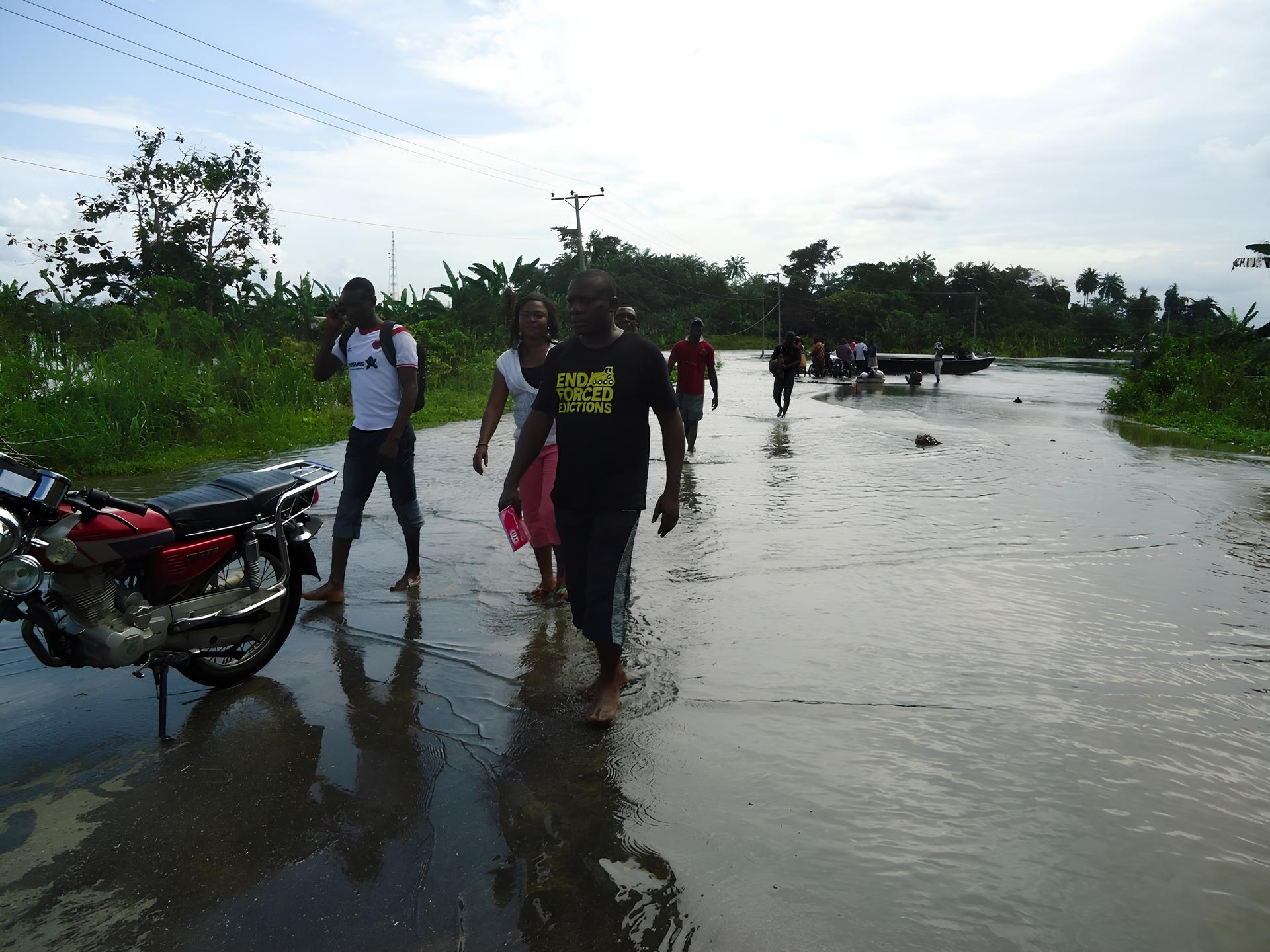
In a move to spotlight the enduring environmental scars left by decades of oil extraction in Nigeria’s Niger Delta, The Miideekor Environmental Development Initiative -MEDI joined WE THE PEOPLE and other environmental organisations on a field visit to oil-impacted communities in Bayelsa and Rivers States to observe and document the effects of long-standing oil pollution.
The visit began at the historic Oloibiri oil well, the birthplace of Nigeria’s oil industry, where the nation’s first commercial crude was discovered in 1956. Despite official claims of shutdown and decommissioning, MEDI’s team, alongside partners, uncovered alarming evidence of persistent leaks. Crude oil continues to seep from the site, contaminating surrounding farmlands and creeks that local communities rely on for sustenance and livelihoods. “This isn’t just history; it’s a living crisis,” said a MEDI representative on the ground. “Our assessment revealed how unchecked pollution is eroding soil fertility, poisoning water sources, and threatening the health of generations in Oloibiri.”
Building on this, MEDI extended the visit to the nearby Iba community, where the impacts of oil infrastructure take a different but equally devastating form. Unlike Oloibiri’s abandoned wells, Iba is crisscrossed by active and ageing pipelines that transect the area, leading to frequent spills and leaks. MEDI’s detailed on-site evaluations documented widespread contamination: polluted creeks unfit for fishing or drinking, and farmlands rendered barren by hydrocarbon seepage. Community members shared heartbreaking stories of lost harvests, health issues, and economic hardship, painting a vivid picture of how even “non-extraction” sites suffer profoundly from the oil industry’s footprint.
This collaborative expedition, spearheaded by MEDI, highlights a critical truth: environmental degradation in the Niger Delta is not confined to high-profile areas like Ogoni. Spills, leaks, and pollution ripple across communities, demanding a holistic cleanup strategy that encompasses the entire region. MEDI’s role as the lead organizer ensured that the visit was not only thorough but also community-centered, incorporating local voices and expert insights to build a compelling case for action.
As part of MEDI’s ongoing efforts to assess and address environmental impacts, this visit aligns with our mission to advocate for sustainable development, hold polluters accountable, and foster partnerships that drive real change. By centring our work on evidence-based assessments like this one, MEDI is amplifying the call for equitable remediation, ensuring that every affected community in the Niger Delta receives the restoration it deserves.
MEDI remains committed to such vital fieldwork, partnering with allies to push for policy reforms, community empowerment, and a cleaner future.